
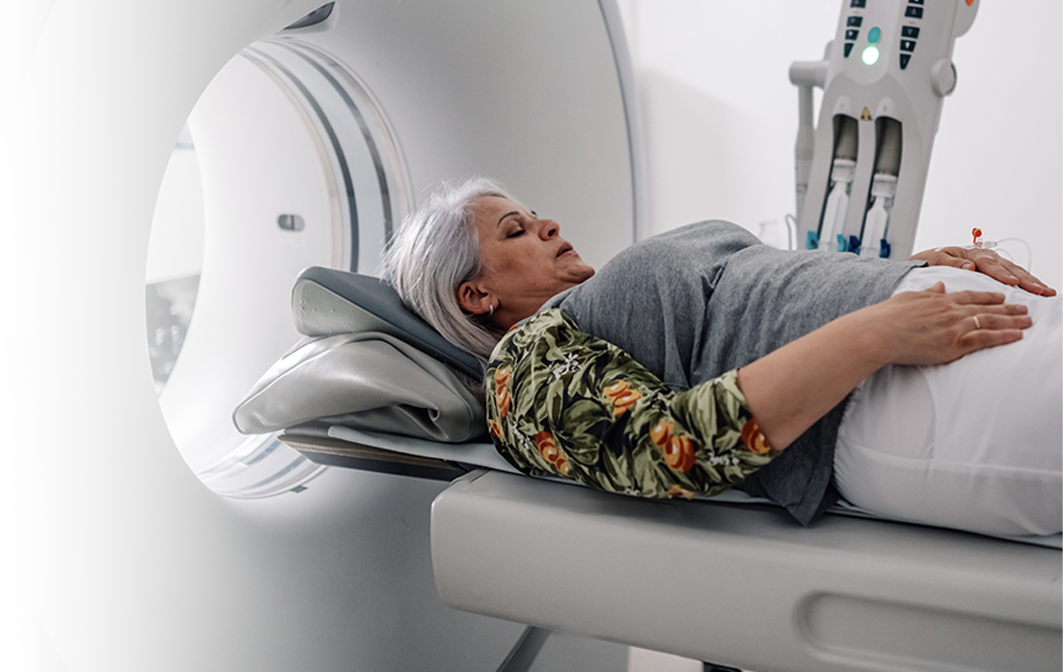
To join PRE-EMPT to help make heart screening as routine—and lifesaving—as mammograms and colonoscopies, you'll need to visit one of the 20+ research sites around the U.S. 1 or 2 times at the start of the study for the screening tests (CAC and CCTA or just CCTA), and then for the 24-month CCTA.
Everything else can be done at home.
PRE-EMPT uses coronary CT scans to get high-quality images of your heart. These scans are done on study-verified scanners to ensure the results are accurate and reliable—so we can confidently learn how to prevent heart disease.
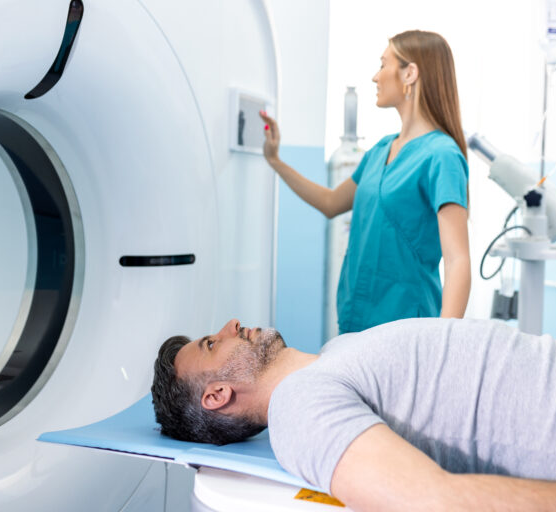
Taking a snapshot of your heart
A CAC scan is a quick, low-radiation CT scan that checks for calcium in your heart arteries.
What to expect:
- You'll lie on a table that slides into a CT scanner.
- Sticky pads will be placed on your chest to monitor your heart rhythm.
- You may be asked to hold your breath briefly.
- The scan takes less than 15 minutes, but the visit may last 30–45 minutes.
The PRE-EMPT study is sponsored by the National Institutes of Health (NIH), and run by the Duke Clinical Research Institute (DCRI), the University of North Carolina at Chapel Hill, and Massachusetts General Hospital. It is supported by about 20 U.S. research sites around the U.S.



Karen P. Alexander, MD
Dr. Alexander is a Professor of Medicine/Cardiology at Duke University and the Duke Clinical Research Institute.
Dr. Alexander focuses on heart disease across the lifespan and helped to develop the specialty area of geriatric cardiology.
Her research explores evidence-based treatment for older adults, including preferences and decision-making as well as frailty and aging assessments in clinical trials and registries. She is currently also leading the PREVENTABLE trial, a primary prevention trial in older adults.
She has authored more than 300 peer-reviewed articles in geriatric cardiology, prevention, and ischemic heart disease.
Pamela S. Douglas, MD
Dr. Douglas is the Ursula Geller Distinguished Professor of Research in Cardiovascular Diseases in the Department of Medicine at Duke University.
Dr. Douglas is an internationally renowned leader in using imaging to improve cardiac care, especially early heart disease. She has also helped to establish several important specialty areas, including heart disease in women, sports cardiology, and cardio-oncology.
Dr. Douglas’ wealth of experience includes authorship of over 750 peer-reviewed manuscripts and 30 practice guidelines, service as the President of the American College of Cardiology, President of the American Society of Echocardiography, and Chief of Cardiology at both the University of Wisconsin-Madison and Duke University.
Neha J. Pagidipati, MD
Dr. Pagidipati is an Associate Professor of Medicine with Tenure and cardiovascular disease prevention specialist at Duke University School of Medicine and the Duke Clinical Research Institute.
Dr. Pagidipati founded and is the director of the Duke Cardiometabolic Disease Prevention Program, which focuses on behavior change and risk factor management in patients with high risk of cardiovascular and metabolic diseases.
Her research spans FDA registration trials to implementation programs focused on cardiometabolic disease risk reduction. She is an Associate Editor of the Journal of the American College of Cardiology, serves on the Board of the American Society for Preventive Cardiology, and has published more than 150 peer-reviewed articles in the CKM space.